

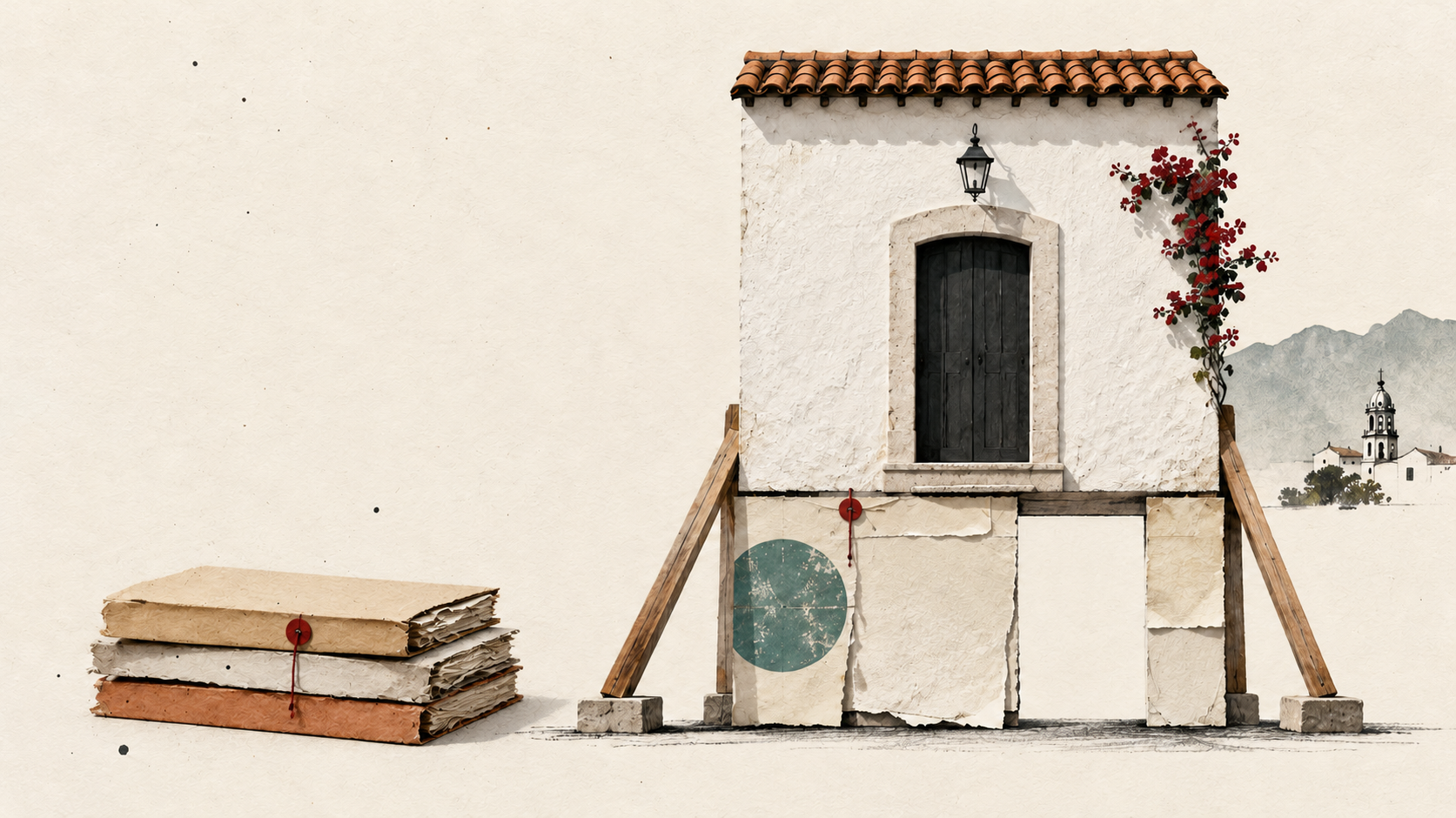
Your Puerto Vallarta Property Is Ready to List. Is It Ready to Sell?
A home might seem ready to put on the market even when it is not truly prepared to sell.
You’ve decided to sell, and you’re getting ready to list. Your agent will take care of the pricing, the photos, and finding the right buyers. But there’s one step that starts with you, and it helps make everything after it run smoother: opening the file.
Selling a property in Puerto Vallarta is not just about how it looks. The sooner your agent knows what you own, who is allowed to sign, what the public records say, and whether anything needs attention, the faster the sale can move.
The point is not to make selling your home all about paperwork. It is to give you and your agent time to handle details before they are tied to an offer, a closing date, or someone else’s schedule.
Start with the ownership file
Start by locating your escritura, or title deed, which proves you own the property. Make sure you can find it easily, read it, and confirm that the property details match what you plan to sell.
If your property is in a fideicomiso, you’ll need to show who’s actually allowed to sign on the dotted line. If marriage or divorce played a role in how you got the place, keep those records handy as well. It saves a lot of last-minute scrambling.

Once there is a buyer, the notary will request a certificado de libertad de gravámenes (CLG, certificate of freedom from liens) from the Jalisco Public Registry. It shows who is registered as the owner, how the property is described and measured, and any liens, annotations, or restrictions on record. You don’t need to order it yourself. But if you know of an old mortgage, a lien, or any detail that may still appear on record, raise it early, so it doesn’t surprise anyone at closing.
Tax and utility records up to date
Property tax (predial) and water records might not be exciting, but they should be included in your seller file. The predial receipt shows buyers that property taxes are paid. Serious buyers will ask for both.
Not every sale uses the exact same document list. Requirements and timing depend on the property and the transaction. But if you have not looked at these records in a while, listing is a good reason to do it.
If there is an existing mortgage, lien, or old balance, do not assume it will sort itself out later. Gather the account information early and share it with your agent, so there is time to plan the path forward.
Selling a condo in Puerto Vallarta? Look beyond the deed
For a condo, the file should include more than just the ownership documents. Find the condominium rules, the current administrator’s contact details, the HOA rules, and records of maintenance fees and any extra charges. Your agent can coordinate with the administrator to request a letter confirming you don’t owe any fees.
Buyers often want to know about rental policies, fees, reserves, upcoming projects, and the building’s rules. Clear answers don’t mean the building is flawless. It just means you are not left piecing together the basics at the last minute.

Keep the records behind your capital gains calculation
Selling usually brings up the issue of capital gains tax (ISR). Under Article 121 of Mexico’s Income Tax Law, you can deduct the documented purchase price and the money you spent building, improving, or expanding the property. So keep your purchase deed and receipts for any remodeling or additions together in one file.
If you’ve lived in the property, you might be eligible for an ISR exemption. How? You’ll need to show it was truly your home. You don’t gather that proof at the last minute. It’s a process, and one worth its own guide. In an upcoming article, we’ll walk you through who qualifies and what to save.
The notary will confirm what applies to your situation. When you request a valuation, we can also walk you through the main costs of selling.
Selling from abroad? Plan the signature early
If you live outside Mexico and can’t be here for the closing, you can grant a power of attorney (poder notarial) that names someone you trust to sign on your behalf. It has to specifically allow them to sell the property, and it is usually granted before a notary in Mexico or at a Mexican consulate abroad. If you are married under a joint property regime, your spouse will likely need to take part too.
In our experience, preparing a power of attorney takes a few weeks and can stretch to about three, depending on the case. Let your agent know as soon as you decide to sell, so it can be coordinated with the notary from the start. It is much easier to plan this before you accept an offer than after.

What the file can’t do on its own
A complete file keeps a sale from stalling. It doesn’t set the right price, put your property in front of qualified buyers, or negotiate the offer. Those are the parts of a sale where sellers going it alone tend to struggle most.
That’s where a listing agent earns their place. At Katya Homm Properties, we price with market data, list on the AMPI Vallarta Nayarit MLS, where your property is shared with about 800 MLS members who can bring their buyers to the table, and promote it across our digital channels, reaching a combined audience of about 10,000 followers and subscribers on YouTube, Instagram, and Facebook. We negotiate on your behalf and coordinate the file with the notary and every party involved, so the paperwork supports the sale instead of slowing it down.
A better question before going live
Before listing, ask yourself:
- Does the ownership record match the property I am selling?
- Do I know who must sign, and will I be in Mexico to do it?
- Are the property-tax, water, and condominium records easy to locate and up to date?
- Do I have my purchase deed and the invoices for any improvements?
- Is there any lien, balance, trust document, lease, or ownership detail that needs clarification?
- Could I give my agent clear answers to a buyer’s first serious questions?
Photos get attention. A prepared file helps a sale move from interest to confidence.
Frequently asked questions
What documents do I need to sell my property in Puerto Vallarta?
Start with your escritura, ID, the documents that show who can sign (trust, company, or marital records when relevant), recent property-tax and water records, and, for condos, the condominium regime and fee records. Your notary confirms the final list for your sale.
How long is a certificado de libertad de gravámenes valid in Jalisco?
Under Article 87 of Jalisco’s Notary Law, up to 45 business days from the date it is issued. That is why your notary usually requests it closer to closing.
Can I sell my condo in Puerto Vallarta if I live abroad?
Not being in Mexico does not have to stop a sale. We work with sellers who live abroad and can coordinate showings, documents, communication with the notary and, when applicable, a power of attorney and the closing. Contact us to talk through your situation.
Thinking about selling in Puerto Vallarta?
Start with a free Puerto Vallarta home valuation and a seller-preparation conversation with Katya Homm and our team. We’ll help you identify the records to gather, so your notary can confirm the documents and timing that apply to your sale.
